
We understand you may be used to a home with an individual gas or combi boiler. After all, 23 million homes in the UK have one. Heat networks, however, are becoming increasingly common across the UK. .
As you’ve moved into a property connected to a heat network, you may not yet understand what this means to you and how it affects your energy bills and tariffs.
Don’t worry. We’re here to help. In this article, we break dwon the complexities of heat network tariffs in a clear and simple way.
Depending on when your development last had its tariff recalculated, you may also find a breakdown specific to your home on our ‘Find your home’ page.
Download your ‘tariff breakdown’ document >
What is included in heat network energy bills and tariffs?
Heat networks, also known as communal or district heating schemes, use a central energy source to provide heating & hot water to multiple properties. Insulated pipes distribute heat across the network. Your heat supplier buys fuel, such as gas or biomass, at wholesale prices and uses it in an energy centre to generate energy for everyone connected.
To make this easier to understand, let’s look at the typical components included in your heating & hot water tariff.
Your tariff covers the operational and maintenance costs required to supply heat to your home. These costs appear as ‘unit rate’ and ‘daily standing charge’, which you’ll also see across the wider energy industry.
The unit rate applies to the energy you use, so it varies with your consumption. The daily standing charge is a fixed daily cost, which applies regardless of how much energy you use.
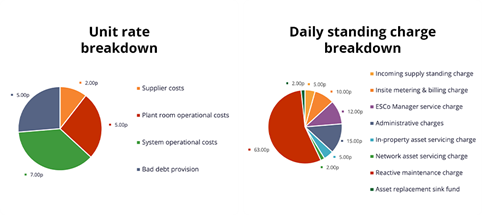 Example breakdown of unit charges and daily standing charges. Weightings vary by heat network.
Who sets your energy tariffs?
Your heat supplier provides the daa we need to calculate your energy tariff. Below is a simplified overview of the process:
- We collect the required data from your heat supplier.
- Our in‑house Tariff Administrators calculate your tariff, taking account of all operational and maintenance costs. Where data is missing—for example, network efficiency—we apply industry average.
- We submit the calculated tariff to your heat supplier for approval.
- Once approved, we write to you to explain any changes and why your tariff has increased or decreased.
- We apply tariffs to our systems at least 31 days after we send the notification letter.
Because your heat supplier approves the tariff, we cannot change it without their instruction. .
In some cases, heat suppliers calculate tariffs themselves. When this happens, we can’t provide a breakdown. If this applies to you, we clearly explain this on the ‘Find your home’ page.
Regardless of who sets your tariff, the Heat Network (Metering & Billing) Regulations 2014 prevent heat suppliers from making a profit from energy sales to residents.
A breakdown of your unit rate
The unit rate, sometimes called the consumption charge, reflects the cost per kilowatt-hour (kWh) of energy used in your home.
| Unit rate = | energy used (kWh) x rate set by your heat supplier (£) |
Your unit rate usually includes:
- Incoming fuel costs: The cost of fuel used by the plant room boilers to generate heat for your home.
- Distribution heat losses: Some heat is lost as energy travels through the network. We calculate this loss by comparing heat leaving the plant room with heat used in properties. If data is unavailable, we apply a standard efficiency assumption of 60%.
- Plant room efficiency costs: Boilers cannot convert fuel to heat at 100% efficiency. This inefficiency increases the effective cost of fuel.
- Contingency provision: This covers unforeseen operational costs, such as seasonal efficiency changes or unrecoverable charges, and helps maintain a reliable heat supply.
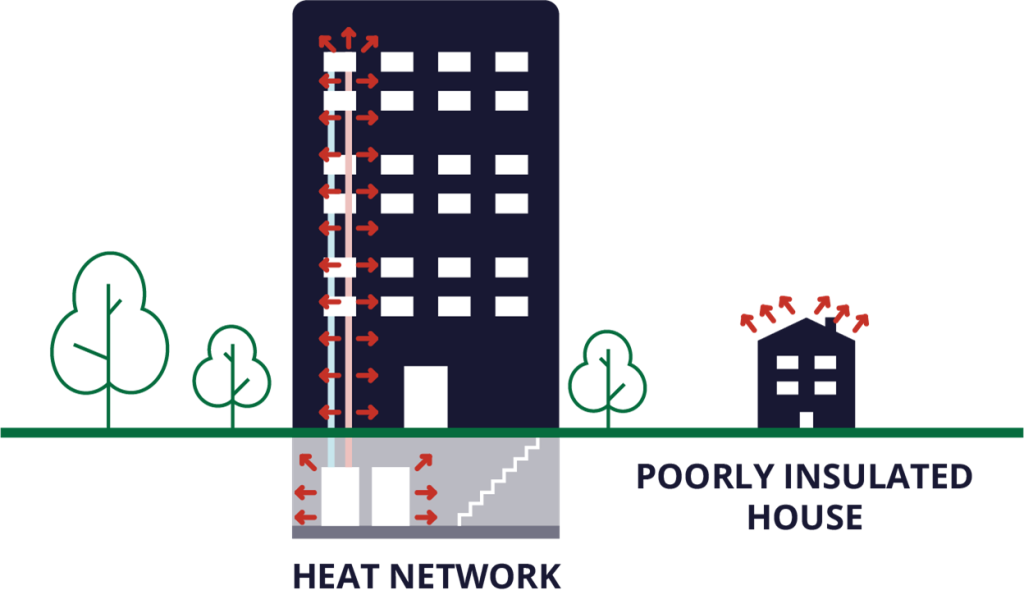
Heat loss occurs in inefficient networks and poorly insulated homes.
|
In simple terms, the unit rate reflects what you pay for the heat you use, along with losses across the network. This works in a similar way to poor insulation increasing costs in a standalone home.
|
We typically review tariffs every six to twelve months to ensure charges remain fair and accurate.
If your consumption feels high, compare it with average usage for similar‑sized households.
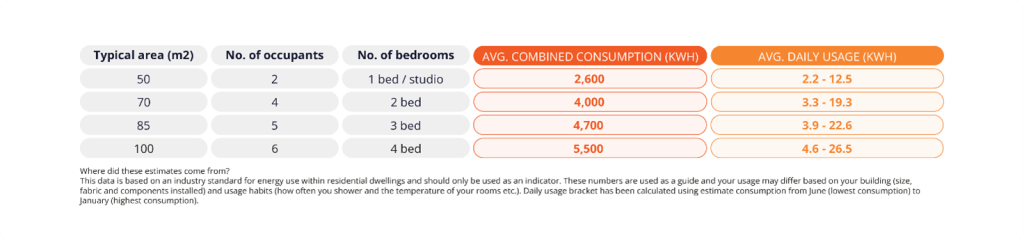
Average gomes use between 2,600-5,500kWh of heating & hot water each year. This benchmark acts as a guide only.
The Heat Trust also provides a heat cost calculator that compres heat network costs with individual gas boilers, including maintenance and repairs.
To help reduce usage, you pay also find our energy saving tips useful.
A breakdown of your daily standing charge
The daily standing charge covers the fixed costs of operating the heat network. You pay this charge every day, regardless of your energy use.
| Daily standing charge = | number of days x rate set by your heat supplier (£) |
This charge typically includes:
- Incoming fuel standing charges: Fixed costs your heat supplier pays to receive fuel at the plant room.
- Metering and billing services: This may include meter reading, system monitoring, data collection, payment processing, and transaction fees.
- PAYG software fees (where applicable): Third‑party software costs for operating PAYG or metering systems.
- Other heat network service costs: These may include tariff reviews, communication, monitoring licences, reporting, and regulatory compliance.
Other costs that may be included in your tariff
- ESCo Manager services: Contract procurement, performance monitoring, and financial management of the energy account.
- In‑property servicing: Planned maintenance of HIUs, CIUs, FCUs, and MVHR systems.
- Network asset servicing: Maintenance of boilers, substations, pumps, pipework, and water quality systems.
- Reactive maintenance provision: Forecasted costs for unexpected repairs.
- Asset replacement funds: Contributions towards long‑term replacement of plant and equipment.
These charges support reliability, efficiency, and long-term performance of the heat network.
What support is available to help pay for your energy bill?
- Get in touch with us using your scheme-specific contact number to discuss payment plans.
- Visit StepChange at stepchange.org for free, independent debt advice.
- Reach out to your heat supplierm suing the details listed on the Find your home’ page for additional support.
We hope this guide helps you understand your heat network energy bill. If you have questions or need support, we’re always here to help.