On 17th September, we welcomed 70 housing providers, property managers, consultants, developers and government representatives in London for our first-ever Insite Partners Summit.
After spending the day listening to discussions on the future of heat networks, one thing became clear. Despite the technical conversations about regulation, metering, tariffs and performance, the biggest challenge facing our sector isn’t technical. It’s partnership.
Key takeaways
- Resident billing, debt and supply issues dominate heat network complaints.
- You don’t have to wait for regulation to start improving your heat network.
- No single company can solve these problems alone, so partnership is the sector’s biggest opportunity.
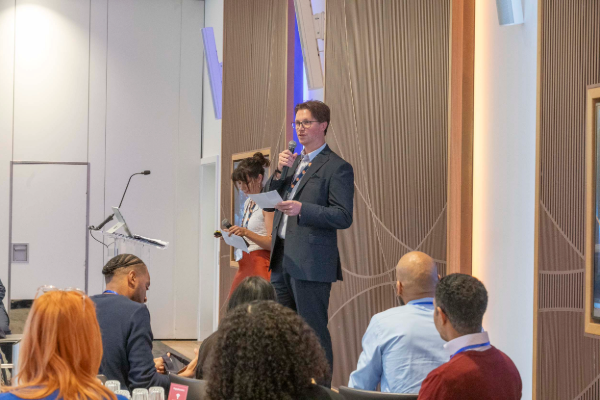
What we heard at the Insite Partners Summit
Speakers raised resident dissatisfaction, network performance issues, and affordability all against the backdrop of new heat network regulations.
Deborah Toner, Senior Policy Researcher at Citizens Advice, flagged 54% of heat network cases relate to billing errors. A further 22% concern debt management, affordability and disconnection, while 12% relate to supply issues. Peter Horne, Head of Compliance at FairHeat, explained that the upcoming Heat Network Technical Assurance Scheme (HNTAS) will bring minimum metering and monitoring requirements, along with performance KPIs.
Importantly, every session came back to the same point: we don’t have to wait for regulation to act.
Stephen Knight, Chief Executive at Heat Trust, urged attendees to register with the Energy Ombudsman and Ofgem. He also encouraged organisations to review their vulnerability, billing, debt and complaints processes. Andrew Reynolds, Head of Asset Management at FairHeat, shared tips including installing adequate metering, water quality testing and regular asset servicing.
Heat networks are technically complex systems with many stakeholders. As a result, none of these problems can be solved by a single company.
The lesson I’ve learned throughout my career
I grew up with Roald Dahl’s Matilda, watching her dad pack sawdust into the gearboxes of old cars to hide their faults. So, perhaps, that is why I grew to have such an aversion to salespeople.
When I was then asked to join the sales team at my first job after university, at a ventilation company, I was conflicted. I decided to take the role, but only if I could do it my way. I met residents in their homes, listened to their frustrations, and got back to them with practical solutions built on the knowledge and experience I’d gained. The real win was seeing the residents’ reaction: their home finally felt like home again.
The business was booming too. It wasn’t because I was the loudest person in the room, or because I had the best sales pitch. It was because customers wanted somebody who understood the problem well enough to help solve it.
That’s what attracted me to Insite Energy.
Heat network services built around real problems
Insite is a heat network services provider. We started because we kept hearing the same thing: residents and clients weren’t getting the service they deserved from metering & billing providers. We built our service around that feedback, with a real focus on customers, and residents now rate us as the top provider on Trustpilot.
It was the same story with maintenance. Time and again we saw heat networks with no proactive servicing. In other cases, networks were maintained by people without the specialist experience to do it safely. That’s why we created our Maintenance division.
The example that stuck with me at the summit came from a client. Anthony Atkinson, Estates and Customer Services Director at Telford Homes, shared how persistent challenges around managing larger, more complex developments led our teams to work together on a different approach. That partnership produced ESCo Manager. It gives heat networks a single point of control and experienced oversight, reducing the damage caused by fractured network management.
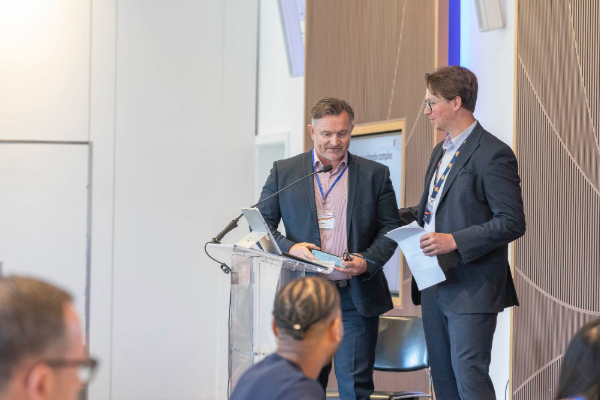
It shows that the best solutions are rarely created in isolation. They emerge when organisations bring different experiences, challenges and expertise together to solve a common problem.
Why partnerships matters in heat networks
We don’t have all the answers, and don’t think a single organisation does. Whether we’re a provider, or heat supplier or operator, we can all bring the right people, knowledge and expertise together to find better solutions.
A housing provider can’t improve resident outcomes without support from operators. Operators can’t optimise performance without accurate data. Billing providers can’t resolve complaints without reliable metering infrastructure. Consultants can identify issues, but recommendations only create value when somebody acts on them.
The future of heat network partnerships
The conversations at the Insite Partners Summit reinforced that the challenges facing heat networks are too important, and too interconnected, for any organisation to tackle alone.
Technical expertise will always matter. Strong systems will always matter. But, the organisations that create the greatest long-term value will be those willing to share knowledge, challenge assumptions and work together toward a common goal.
Partnership isn’t a nice-to-have in our sector. It’s becoming the foundation on which future success will be built.