Spend enough time in the heat network sector and the conversation is usually around the same topics: complying with regulations, ensuring supply and transparency to consumers, keeping costs down and extending asset lifecycles.
But who’s going to make this all happen?
I was recently added to the CIBSE Certification Heat Network Consultant Register, a milestone that reinforced something I’ve seen throughout my career. Successful heat networks depend on skilled people. The question is whether we’re doing enough to develop the next generation of specialists.
Why do heat networks need specialist engineers?
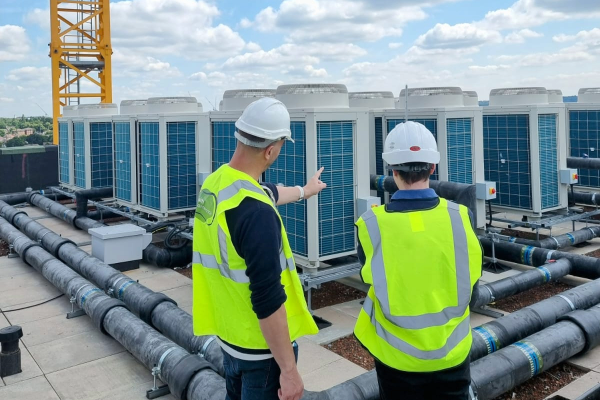
Heat networks need specialist engineers because they’re complex, interconnected systems that can’t be maintained like a standalone boiler.
If you owned a Rolls-Royce, you wouldn’t take it to the nearest garage. You’d want a specialist. Heat networks are no different. A general tradesperson or “man in a van” might be an excellent plumber or electrician, but heat networks need engineers that understand the system as a whole.
They need to understand building management systems (BMS), heat interface units (HIUs), metering, hydraulics, water quality and energy efficiency. They also need to know how any one of those can impact the wider network.
A small fault can easily escalate into a major operational problem if it’s not picked up early. We’ve seen untreated water contribute to pipework degradation affecting supply to 190 homes, resulting in costly repairs and residents being left without heating for a week.
The engineers who make the biggest difference are the ones who understand the bigger picture, not just the asset in front of them.
Is there a skills shortage in the heat network sector?
The short answer is, yes.
Heat networks currently supply around 3% of the UK’s heat demand, but that figure is expected to rise to around 20% by 2050. Expanding the sector doesn’t only rely on investment in design & build. It also requires investment in how these networks should be operated and maintained to deliver efficient performance and reliable supply for residents.
That’s where Ofgem’s Consumer Protection Regulations and the forthcoming Heat Network Technical Assurance Scheme (HNTAS) come in. They raise expectations around performance, transparency and consumer outcomes, all of which can’t happen without the right expertise.
The challenge is that those skills take years to develop, which is why investment in people needs to happen long before demand reaches its peak.
As such, the best time to invest in heat network engineers would have been when the sector was taking shape in the 1960s. The second-best time is now.
How do we develop the next generation of heat network engineers?
If my career has taught me anything, it’s that learning how to operate and maintain a heat network does not happen overnight. It requires a combination of formal training and hands-on experience. This is where apprenticeships can make a real difference.
Through our partnership with London South Bank University Group, apprentices gain hands-on experience across live heat networks while learning from experienced engineers.
We currently have apprentices and trainees developing their careers across our engineering team, including an Apprentice Building Services Engineer, a Plumbing and Heating Apprentice and a Trainee HIU Service Engineer. Together, they are gaining hands-on experience while learning from experienced heat network specialists.

David’s apprenticeship journey shows how a balance of hands-on experience and university classes are a great route into the sector.
How to support the continued development of heat network engineers?
In addition to experience gained over time, guidance from experienced engineers can make a real difference too. Mentoring and knowledge sharing matter, both within organisations and across the wider sector.
A range of initiatives have helped me and the wider team develop specialist heat network knowledge:
- New engineers at Insite complete a structured shadowing programme before working independently. This typically lasts three to four weeks for experienced engineers and six to eight weeks for trainee or improver-level engineers, helping practical expertise pass from one generation to the next.
- BESA now offers HNTAS-focused training programmes.
- The Department for Energy Security and Net Zero has published operational upskilling resources.
- The Heat Exchanger Mentoring Programme (HEMP) is helping experienced professionals share knowledge across the sector.
Technical knowledge is only part of the role. Heat network engineers regularly work in residents’ homes. So, investing in soft-skills training, such as professionalism and clear communication, help engineers to build trust, explain issues clearly and deliver a better resident experience.
The heat network industry is undeniably changing and growing, and its success will depend on skilled specialists. Investing in apprenticeships, training and knowledge sharing is therefore essential.
Whether your background is in engineering, operations, customer service, billing, energy management or project delivery, there are more opportunities than ever to build a career in heat networks.