On 1st May 2026, the Renters’ Rights Act 2025 came into force in England, introducing major changes to the private rented sector. As the date approached, we’ve been hearing the same questions:
“What counts as ‘reasonable service’?”
“Do we need to be clearer about costs, billing, and services?”
“Where does the responsibility sit?”
It’s not just the Renters’ Rights Act raising these concerns. There’s the Building Safety Act, Awaab’s Law, Minimum Energy Efficiency Standards (MEES), the Future Homes Standards, and the Warm Homes Plan. That’s not to mention the heat network sector itself, which is also moving towards greater operational accountability, consumer transparency, and performance standards through Ofgem’s consumer protection regulations and the Heat Network Technical Assurance Scheme (HNTAS).
It’s frankly one of the biggest regulatory changes in housing the UK has experienced since the late 1980s.
While most of these changes don’t directly target communal heating, they do increase scrutiny on the services they provide.
We’ve outlined how you can update your day-to-day network operations to help meet new housing regulations.
Why heat networks matter for housing compliance
From the Renters’ Rights Act to MEES, many of these regulations don’t specifically mention heat networks. So why do they matter?
Taken together, these changes represent a wider shift. The focus is moving from building management to better resident experience, operational accountability, and environmentally sustainable homes.
How you manage your heating infrastructure, which provides an essential service (heating & hot water) to them, does play a key role in meeting these new requirements.
Not only that, but the nature of how these systems are set up also increases expectations. Unlike individual heating systems, a single issue can impact dozens of households simultaneously. This increases operational pressure and compliance risk.
Residents also expect higher performance standards, especially as they can’t switch energy suppliers. At the same time, it can also be harder to benchmark what good service looks like compared to the traditional utility markets. New, specific heat network regulations do aim to clarify this.
Lastly, accountability is often blurred across landlords, operators, ESCOs, and third-party providers responsible for metering & billing and maintenance.
That’s why getting your communal heating operations in order is becoming increasingly important.
Rent, heating and billing: what needs to change?
Starting with the Renters’ Rights Act, it places tighter controls on rent increases. Private landlords can now only raise rent once per year and this must align with market value. This leaves landlords with less flexibility to absorb fluctuating costs.
Particularly in the built-to-rent market, we have historically seen energy bundled into rent. This makes payment management easier, but with the recent regulatory change, it puts you at risk.
Heat tariffs are typically reviewed every 6 to 12 months to reflect the latest bulk supply agreement. As rent can only be updated annually, it could mean costs associated with the network’s operations won’t be fully recovered.
Bundled models also reduce transparency. It becomes harder to show how much rent increases are related to market value versus heating costs. At the same time, expectations around billing transparency and resident communication continue to increase across the heat network sector due to Ofgem’s consumer protection regulations.
What you can do today
- Review heat charges, separating and defining unit rates and standing charges.
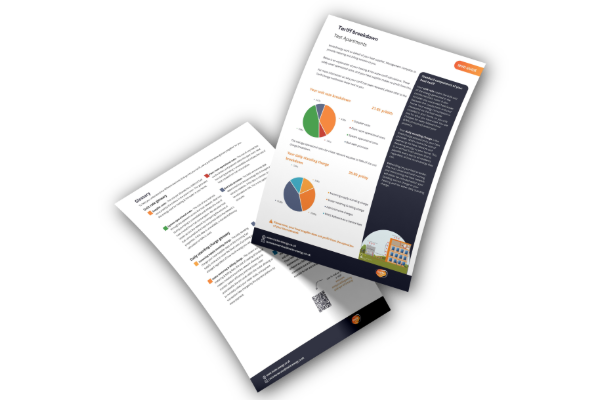
- Provide clear tariff breakdowns to residents, including unit rate and standing charge inclusions.
- Keep historic billing data accessible in case of disputes or challenges. We provide this through our customer portal, ‘my insite’.
How quickly do you need to fix heating & hot water issues?
Awaab’s Law, which came into force for the social rented sector on the 27th October 2025, requires social landlords to fix damp, mould, and emergency repairs within strict timeframes.
Heating and hot water are basic living standards. This makes fast response times in case of a supply issue essential. You also need clear fault logging, response-time tracking, and outcome records.
Additionally, heating plays a key role in preventing damp and mould. When home temperatures fall below 16°C, the risk of condensation and mould growth increases. No heating, or even intermittent heating, should therefore be minimised as much as possible.
What you can do today
- Define what counts as an emergency vs non-emergency issue for heating systems.
- Complete repairs promptly in line with service level agreements.
- Track faults, response times, and outcomes in collaboration with your maintenance provider.
- Get a planned preventative maintenance contract in place for ongoing asset servicing.
- Monitor network performance to detect issues early.
Are your heat networks ready for new energy and performance standards?
For new builds, the Future Homes Standards focus on ‘net zero ready’ homes, primarily banning fossil fuel heating. While the Warm Homes Plan is a £15 billion Government investment aimed at upgrading up to 5 million homes, focusing on insulation and more environmentally-friendly energy systems.
Heat networks support this transition. They can connect to district networks or use alternative heat sources, such as electric boilers, combined heat and power units, and heat pumps.
Ultimately, these systems are part of the solution, helping to remove fossil fuel heating and, depending on the existing home’s location and set-up, providing an alternative heating solution.
However, design is only part of the picture. MEES requires private rented properties to achieve at least an ‘E’ on their energy performance certificate, which will likely become more stringent in the next few years.
The Renters’ Rights Act also promotes longer tenancies by limiting landlord-led terminations. In practice, this could mean residents stay in homes longer, increasing expectations around comfort and long-term network performance.
Alongside this, HNTAS will soon come into force, establishing clearer technical and operational benchmarks across design, performance, maintenance, and continuity of supply. For operators and property managers, it reflects a wider industry shift toward improved heat system visibility, efficiency, and resident outcomes across both new and existing developments.
What you can do today
- Ensure heat networks are future-proofed, not just compliant at handover.
- Carry out metering surveys to identify gaps in metering and data monitoring.
- Track performance against KPIs like flow/return temperatures and energy use.
- Carry out mechanical surveys to identify efficiency gaps.
- Implement planned preventative maintenance to reduce supply risks.
Whether focused on rent, repairs, or efficiency, ultimately, there is an increased push for property managers and landlords to create a clearer, more accountable resident experience.
For heat networks, that means residents don’t only expect consistent heating & hot water supply, but also to be fairly charged, for issues to be resolved quickly, and for management to be transparent.
For landlords and property managers, communal heating is no longer just an engineering function sitting in the background. It’s becoming a visible part of resident experience, operational resilience, and compliance readiness.