A heat network, also called communal or district heating, is a system where heat is generated centrally and distributed to multiple properties via a network of insulated pipes. This means no individual boilers in each home. Instead, residents typically have a heat interface unit (HIU) that connects to their home’s heating system (e.g. underfloor heating or radiators). This ‘What is a heat network’ video by the Department for Energy Security & Net Zero (DESNZ) provides more in-depth information on how heat networks operate and the benefits they bring to communities.
|
|
|
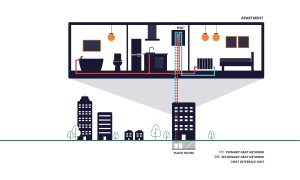

This centralised set-up supports energy efficiency, easier maintenance, and a smoother path to energy security and decarbonisation.
In regulations, cooling networks, where cooling is provided from a central source to multiple properties, is also included under the heat network definition.
Heat networks offer long-term benefits:
- Lower carbon emissions: Easier integration of low-carbon tech like heat pumps or waste heat recovery.
- Cost efficiency: Shared infrastructure can reduce long-term maintenance costs.
- Futureproofing: Networks can be upgraded without prolonged disruption to residents.
- Improved resident experience: On-demand heating, faster hot water, and improved technologies improve comfort and transparency.
Upcoming regulations are expected to boost investment, helping the UK to improve reliance on locally sourced energy and achieve its 2050 Net Zero targets.
The heat supplier is the organisation that holds the heat supply agreement (HSA) with the residents or commercial tenants. This is usually the freeholder, building owner, housing association, or local authority.
They’re responsible for:
- Procuring bulk energy for the heat network.
- Managing the central plant room.
- Maintaining the distribution network (incl. water quality testing).
- Setting and reviewing resident tariffs.
- Ensuring compliance with heat network regulations.
Insite Energy supports heat suppliers with metering & billing, maintenance, and performance monitoring, but we’re not the legal supplier and don’t make strategic or financial decisions.
Heat networks involve multiple organisations working together. Here’s a quick breakdown:
- Heat supplier: The authorised person that supplies heating, cooling, or hot water to consumers via the heat network. This role is focused on consumer-facing, contractual and financial activities, rather than physical operation of the network.
- Heat operator: The authorised person that controls the transfer of thermal energy on the network for the purposes of supplying heating, cooling or hot water. They may choose to engage a contractor to manage day-to-day operation of the heat network.
- ESCo Manager: Appointed by the heat supplier or operator, they oversee the day-to-day operations, contracts, and financial management. Strategic decisions and financial responsibility remain with the supplier or operator.
- Metering & billing provider: Appointed by the heat operator or supplier, they manage meter connectivity, billing, and payment systems. They can advise, but don’t make final decisions.
- Maintenance provider: Appointed by the heat supplier or operator, they service and repair heat network assets. Ideally the same provider should maintain the plant room assets, pipework, and HIUs to ensure system-wide consistency.
- Consumer: Residents and commercial end-users who use heating, hot water, or cooling. Only residential households and micro-businesses will be covered by Ofgem’s upcoming consumer protection regulations.
We provide operational support for heat network, where appointed by the heat supplier. This could include:
- Metering & billing, including resident communications
- Maintenance of all heat network assets from the plant room to residential homes
- Performance monitoring (via Consultancy)
- Tariff reviews (as part of Metering & Billing and ESCo Manager)
- Energy procurement (where instructed)
- Financial and contract management (as part of ESCo Manager)
- Support with your applications to the Energy Ombudsman
- Future reporting to Ofgem and liaison with the Energy Ombudsman (as part of ESCo Manager)
- CPD-certified ‘Heat network essentials’ training for property managers, housing providers, and consultants.
We don’t:
- Own the heat network
- Act as the legal heat supplier
It depends on your set-up, resources, and priorities. Managing a heat network in-house can work well if you have a dedicated team with the right expertise. That said, even clients with in-house teams often turn to us for additional support.
Many property managers and housing providers choose to outsource to:
- Reduce risk by relying on specialist support for compliance, billing, and maintenance
- Free up internal time by handing over day-to-day operations and resident queries
- Improve resident experience with 24/7 support and clear communications
- Stay ahead of regulations with proactive monitoring and reporting
- Get joined-up insights across metering, maintenance, and performance
Insite focuses solely on heat networks, so you’re not getting a generalist, you’re getting a partner who understands both the details and the bigger picture. We tailor our support to your setup, whether you need full management or help with specific services.
Heat network regulation in Great Britain is changing rapidly. You already need to comply with some regulations, and more will be coming soon.
- 2014: The Heat Network (Metering & Billing) Regulations introduced requirements for meters at building entry points and in individual homes.
- January 2025: Ofgem became the heat network regulator under the Heat Network (Market Framework) (Great Britain) Regulations 2025, introducing stronger consumer protection and complaint handling requirements.
- April–October 2026: Heat network operators and suppliers will need to collect and report financial, metering, billing, pricing, vulnerability, debt, and service quality data to Ofgem through a new digital portal. Please use our guide to help you find where information is stored and how to prepare.
- 2027: The Heat Network Technical Assurance Scheme (HNTAS) is expected to introduce minimum standards for the design, operation, and performance of heat networks.
- Heat network zoning pilots are also underway to support the rollout of low-carbon heat networks in suitable areas.
To prepare, operators should review metering and billing compliance, strengthen customer service processes, and improve data collection and reporting systems.
For more details and information on how to prepare, visit our Regulations page.
Compliance depends on your role and the age of your network. If you’re a heat supplier, you’ll need to:
- Register with the Energy Ombudsman (as of 1st April 2025) via their online portal.
- Register on the Ofgem digital portal once live (expected in October 2026).
- Provide relevant data to Ofgem required under the Heat Network (Market Framework)
(Great Britain) Regulations 2025. - Ensure residents receive accurate, clear and timely bills and tariff change notifications.
- Install sufficient meters to comply with HNMBR 2014 and the Heat Network Technical Assurance Scheme (HNTAS).
We can support you with:
- Applications to the Energy Ombudsman,
- Future registration and data submission to Ofgem’s digital portal,
- Metering & billing compliance,
- Performance monitoring and reporting,
- Network efficiency reports and improvement works,
- Resident communications,
- Tariff reviews and technical standards,
- CPD-certified ‘Heat network essentials’ training.
Simply reach out to your Account Manager or our Solutions Team for more information.
You can also access our ‘Regulations’’ webpage, guidance documents, and latest news & advice resources for more information on what to expect and how to prepare.

Can’t find your answer?
Just reach out to our team. We’re ready to help you sort it out quickly and keep your heat network running smoothly.