UK wholesale natural gas prices have hit their highest levels in nearly four years. While we’ve seen more alternative energy sources adopted across heat networks, it’s estimated that 88% of them are still powered by gas. That volatility isn’t something to ignore, it’ll flow straight through to the cost of running your heat network.
And it comes at the worst time.
As demand rises going into the winter months, so does the cost of supplying heat. Energy consumption increases, operating costs become more visible, and residents pay closer attention to their bills. That’s often when housing providers and property managers discover their income doesn’t cover the true cost of running their networks.
Costs change gradually, but tariffs don’t always keep pace. For much of the year that can go unnoticed. Winter is when it shows up, and by then it’s already costing you.
So what can you do to ensure full cost recovery?
How often should you review your heat network tariffs?
Heat network tariffs should be reviewed every 6 to 12 months.
Ofgem’s authorisation conditions don’t permit a tariff change more frequently than every 6 months. Reviewing more often than that gains you nothing.
Leave it too long, though, and you risk missing real cost changes and seasonal fluctuations that should have been reflected in your charges. That’s what the 12-month upper limit protects against.
Annually also tends to line up naturally with other heat network contract cycles, such as metering & billing, operations & maintenance (O&M), and fuel procurement.
A tariff review should provide a clear picture of whether current charges still reflect:
- Incoming fuel and utility costs
- Daily standing charges
- Maintenance and servicing costs
- Metering & billing costs
- Management and administration costs
- Network efficiency and heat losses
The objective isn’t to increase charges, as that wouldn’t be fair to residents. It’s to ensure they’re accurate, transparent and based on the real cost of supplying heat.
What causes heat network tariffs to fall behind actual costs?
Tariffs aren’t correct if they’re not reviewed when heat network contracts renew, or seasonal demand swings don’t get factored into how charges are set in the first place. We usually see both of these causing under- or over-recovery of heat network costs.
A useful exercise is to compare today’s costs against the assumptions your current charges are built on. Are those assumptions still true? If fuel costs have increased, procurement arrangements have changed or operating costs have grown, there may be a disconnect between the costs being incurred and the revenue being recovered.
This is particularly important ahead of winter, when heat networks experience their highest levels of utilisation. Higher demand means higher costs. If a shortfall exists, winter is when it becomes visible on the balance sheet.
That’s why autumn is an important checkpoint: reviewing charges proactively is far easier than needing to potentially back bill residents.
How do you justify heat network charges to your residents?
In short: transparency. Charges need to be itemised rather than bundled: energy costs kept separate from rent, and unit rates separated from standing charges. A clear breakdown of what sits inside each should also be provided. Where maintenance costs aren’t included in the energy tariff, but form part of your service charge, ensure to provide residents with a breakdown of that too.
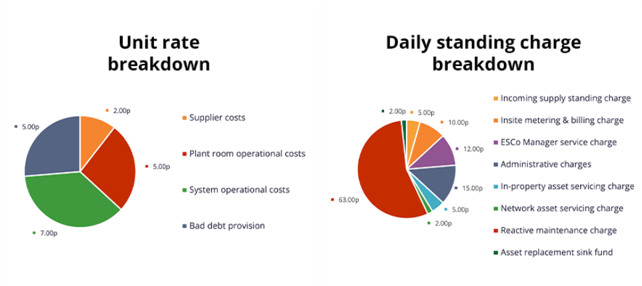
This is no longer just good practice, but a regulatory requirement. heat network consumer protection regulations came into force in January 2026. They place clear obligations on fair treatment, transparency and providing consumers with clear information about the charges they pay.
Looking further ahead, the , still in development with launch expected in 2027, will add a further layer of accountability around performance and efficiency across the sector.
The direction of travel is clear: heat suppliers increasingly need to understand the real costs behind their charges, and demonstrate that pricing is fair, transparent and cost-reflective.
What should heat network operators do before winter?
We recommend doing three things, ideally before demand starts to increase:
- Review your energy brokerage renewal quote: Understand how your incoming fuel supply costs may change and whether your procurement arrangements remain competitive. A renewal quote is a natural checkpoint: if incoming fuel unit rates and standing charges have shifted since your last agreement, it’s worth knowing before you’re locked into another term.
- Check what’s changed since your last tariff review: Are the assumptions used to set your existing charges still accurate? If incoming fuel costs, procurement arrangements or operating costs have changed since then, that’s the gap a review needs to close before winter demand exposes it.
- Update your tariff in time: Residents must be given at least 31-days’ notice where tariffs increase. That means your metering & billing providers needs enough time to review heat network costs and energy consumption levels, calculate fair tariffs, and communicate these transparently to your residents. Leaving it until winter demand exposes the shortfall doesn’t give you that room.
Reviewing your tariffs and procurement arrangements now can help avoid budget pressures later, improve transparency for residents and ensure your charges remain aligned with the true cost of supplying heat.
Don’t wait for winter, or the regulator, to tell you where you stand. Our energy brokerage and tariff review services are here to help. Speak to your Account Manager or request a tariff review via our webform.