Improving customer service on heat networks: 5 expert insights
Table of contents
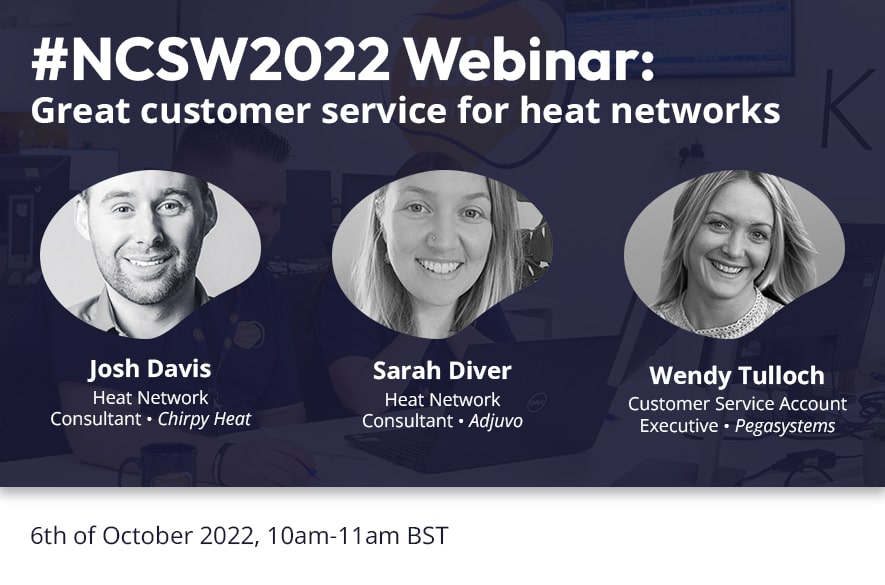
During National Customer Service Week 2022, Insite Energy hosted a webinar exploring what great customer service looks like in the heat network sector. Industry experts discussed five key themes: understanding residents, clear communication, proactive management, collaboration and learning from other industries.
The themes discussed were empathic advisors and knowledgeable experts, responsiveness and accessibility, self-serve capabilities and digitalisation, and first-time fix and continuous improvement, which are all commonplace in other industries.
Emily McAlindon, Commercial Director at Insite Energy, chaired the discussion. She was joined by Josh Davis of Chirpy Heat, Sarah Diver of Adjuvo and Wendy Tulloch of Pegasystems.
Understand the residents you sefve
Effective customer service starts with understanding the people who use your heat network. Without that insight, investment in systems, communications and support can easily miss the mark.
Sarah highlighted that many residents have little understanding of how heat networks work. Heat network suppliers and operators that recognise this and go the extra mile to provide that educational piece are already one-step ahead.
In the industry, there is also a general feeling of injustice for heat network customers, especially because they can’t switch suppliers. It’s important to remember this when communicating with your customers and be understanding towards this.
Understanding the demographic profile of a development can also improve decision-making during procurement. It helps ask the right questions from the start, with Josh recommended a few:
Do you have in-home displays that have a vocal part in it so people who are blind can still hear it?
Can you provide paper bills for people who aren’t as tech-savvy?
Do you have a self-serve option for people who don’t want to be on the phone?
Move from reactive to proactive communication
Great customer service should not begin when a resident raises a complaint. Instead, providers should identify opportunities to communicate earlier and reduce customer effort. As Wendy points out:
“It’s important to move from a reactive service, which customer services has been for a long time, to a proactive one. People don’t like to be in a situation where they have to phone you.”
To encourage this, Josh suggested sending a letter in the summer to remind people to set up a Direct Debit and build-up credit for the winter months. Having a one-pager with energy efficiency advice to hand is another way providers can be proactive.
Even when residents get in touch with your call centre, you should give residents the feeling that you are on this journey with them and that they are heard. To continuously do this, Sarah recommended to “collect queries and complaints, and use them to see if you can improve processes and communicate to residents properly”. Where heat suppliers and operators need to be especially transparent is in communicating heat tariffs and billing processes. She said:
“Billing and charges are one of the two top areas that get complaints. To ensure your tariff is fair and transparent, ask yourself if it is currently recovering the costs it needs to.”
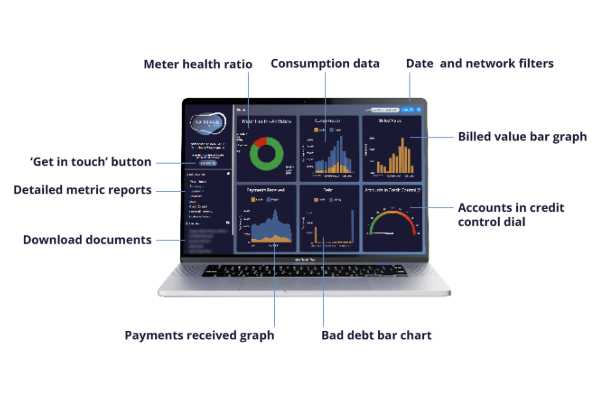
Insite Energy’s client portal, VANTAGE, gives heat network suppliers and operators an insight into their metering & billing data.
Use data to solve problems before residents report them
Data can play a critical role in improving service quality. However, collecting information is only the first step. The real value comes from using that information to identify issues and act before residents feel the impact. To ensure service providers are held accountable, Josh recommends establishing clear KPIs and SLAs to set those standards:
“A lot can be done by proactive management. If you’ve got metering & billing data coming in on a monthly basis, and you’re taking the time to analyse that data you can actually reach out to residents before they need to reach out to you. The data is there, but it’s finding that time and resource. Digitalisation is core in effectively managing heat networks.”
With continuous digital innovation putting home management into residents’ hands, the same is expected from energy use consumption and interaction. Sarah adds:
“There’s a very long road to go to have that visibility and control of heat networks in homes. There are many opportunities to provide more insight and add more control to those customers.”
Build a culture of collaboration
Great customer service depends on collaboration between teams, suppliers and residents. Sarah recommended regular refresher training to ensure frontline teams can clearly explain tariffs, billing processes and available support options. Josh encouraged customer service advisors to actively investigate questions they cannot answer immediately. This helps advisors develop their knowledge while building trust with residents.
External collaboration is equally important. Heat suppliers, managing agents and service providers often support the same customer, so sharing knowledge and best practice benefits everyone involved.
“We’re the heat network geeks, and not everyone else is going to be as enthusiastic as us.” Sarah said, “Even if it’s just a few little takeaways that land with the customer, it’s helping yourself and those that have a shared customer.”
You can even go as far as to collaborate with your customers. There are currently seven generations living side by side. Each brings different skills, behaviours and expectations. We should enable them to be proactive and pre-emptive, recommended Wendy.
“The queries that are coming to you are really from the ones that need the specialist help. Let’s enable all generations and give them the platform where they can ask questions and help them give answers too.”
Cross-team collaboration helps Insite Energy’s customer service advisors share knowledge, improve response times and deliver a better experience for residents.
Look beyond the heat network sector
Some of the webinar’s strongest discussions focused on customer experiences outside the heat network sector. Participants shared examples ranging from customer communities and scheduled call-backs to loyalty and reward programmes.
One idea that particularly stood out was to create a reward system. Wendy highlighted Vitality’s Apple Watch scheme as an example of how incentives can drive positive customer behaviour. By rewarding members for staying active, the programme increased engagement while supporting better health outcomes:
“The idea of rewarding customers, not only saw their customers go up, but it also saw the number of health claims go down as their members become more and more healthy. The fact that they were able to take a step back and look at what they want and what their members wanted, if companies can start to do that is a real gamechanger.”
The webinar highlighted that excellent customer service is rarely driven by a single initiative. Instead, it comes from understanding customers, communicating clearly, making better use of data and continuously learning from other industries.
As heat networks become more established across the UK, the organisations that embrace those principles will be best placed to deliver a better experience for residents.